By:
Saturday, January 24, 2026
Classrooms or Creditors? Why Fiscal Justice Matters for Education.
Happy International Day of Education!
Education is more than a fundamental human right. It is a powerful pathway to opportunity, dignity, and social mobility. Yet for millions of children and young people around the world, that pathway remains blocked by poverty, inequality, and structural barriers beyond their control.
As a member of the Right to Education Youth Network (REYN), the Grown Too Quick Foundation proudly contributed to the statement of the United Nations Special Rapporteur on the Right to Education, Farida Shaheed, in commemoration of the International Day of Education. Our contribution centred on a simple but urgent message: young people must not only benefit from education policies, they must help shape them.
Globally, an estimated 272 million children and young people remain out of school. Behind these numbers are complex realities of poverty, inequality, discrimination, conflict, and inadequate public investment in education.
GTQF emphasized two critical issues in its submission.
First, we called for greater efforts to address the socio-economic barriers that continue to deny children their right to quality education. Poverty remains one of the strongest predictors of educational exclusion, forcing many learners to abandon school despite their aspirations and potential.
Second, we highlighted how global economic pressures, including unsustainable debt burdens, tax abuse, and austerity measures, are undermining governments’ ability to invest adequately in education. Across many low- and middle-income countries, public resources that could support classrooms, teachers, and learning materials are instead diverted towards debt and debt interest repayments and other financial obligations.
Malawi: A Case Study in Education and Fiscal Justice
Malawi provides a powerful example of how global financial systems can shape educational outcomes.
As of 2025, Malawi allocates approximately 18.2% of government revenue to debt servicing, reducing the fiscal space available for investments in education, health, and social protection. Evidence generated through the GRADE Project (Government Revenue and Development Estimations), alongside data from Debt Justice, demonstrates that reducing external debt servicing obligations could unlock significant resources capable of accelerating progress toward key Sustainable Development Goal (SDG) 4 targets on education (Figure 1).
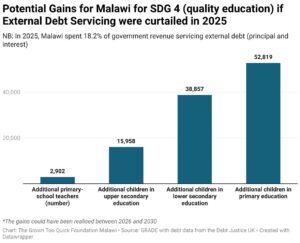
Figure 1: Potential for Malawi if external debt servicing costs were curtailed
For young people, these issues are not abstract economic debates. They directly influence whether schools have sufficient teachers, whether classrooms are adequately equipped, and whether children from low-income families can remain in education. Young people experience the consequences of educational inequality firsthand. They understand the barriers that prevent their peers from accessing quality learning opportunities, and they possess valuable insights into the solutions required.
At GTQF, we believe that meaningful educational reform must be informed by those most affected. Youth participation strengthens accountability, improves policy relevance, and helps ensure that education systems respond to the realities facing learners today. By engaging in international advocacy processes, we seeks to amplify youth perspectives and ensure that discussions about education extend beyond classrooms to include the economic and social structures that determine educational opportunity.
Achieving inclusive and equitable education for all requires addressing the structural inequalities that continue to limit opportunity. GTQF therefore reaffirms the need for reforms that promote fiscal and social justice, including fairer debt arrangements, greater tax transparency, and economic policies that prioritize people over profits. Resources must be directed toward strengthening education systems and social protection, rather than perpetuating cycles of inequality.
Data sources: GTQFoundation; Debt Justice UK; GRADE (Government Revenue and Development Estimations Project)